Moussaka: My Greek Labor of Love
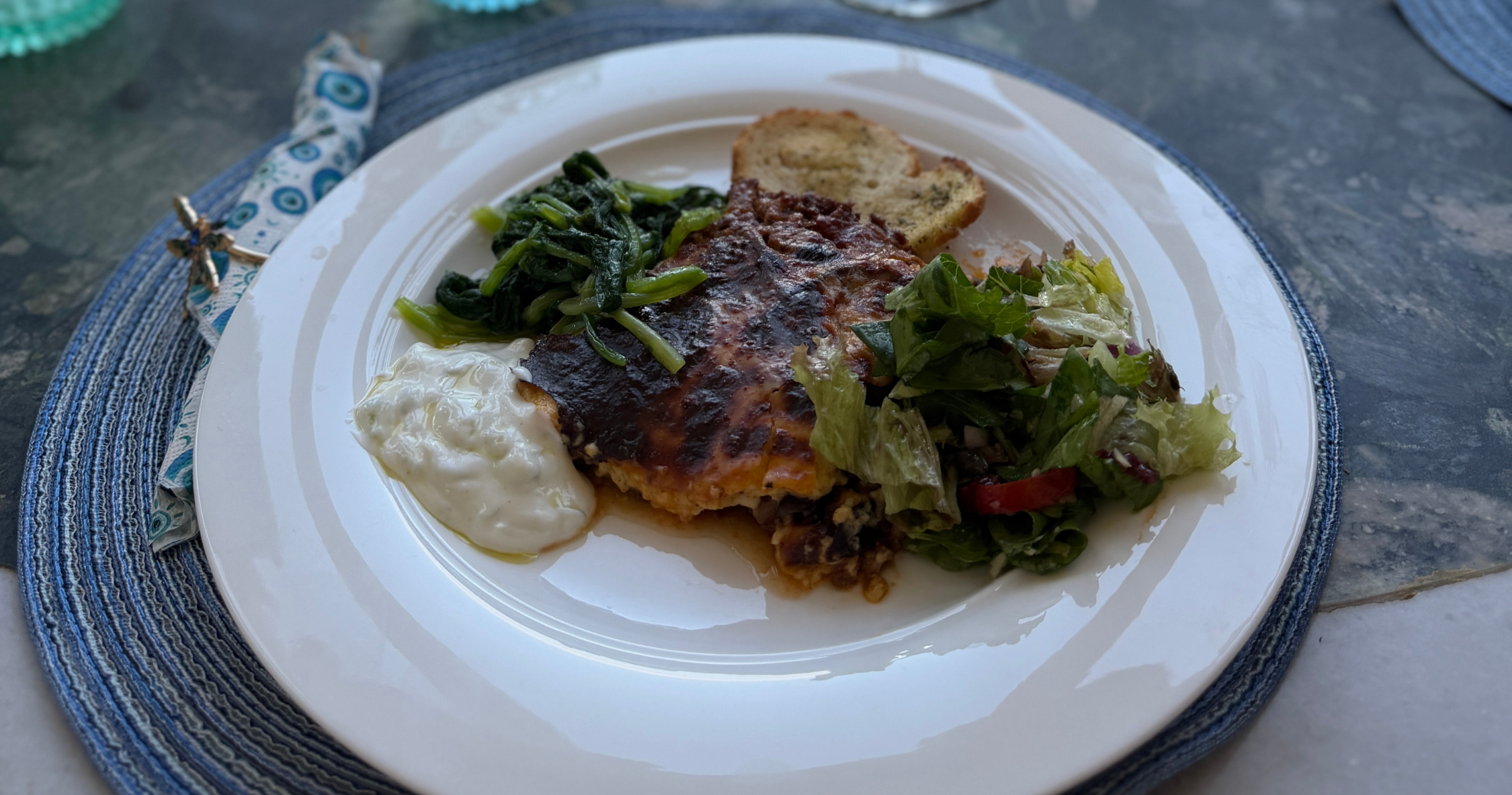
I fell for moussaka in Greece, where it appears on taverna menus and family tables alike, and where no one is ever in a hurry to eat.
It's the kind of dish that asks for an unhurried afternoon - which is exactly the kind of cooking I love most. You slice and salt the eggplant, coax a bolognese to richness over a low flame, and stand at the stove whisking béchamel until it's silky. Somewhere in the middle of it all, the kitchen fills with the scent of cinnamon, allspice, and cloves, and the whole house begins to feel like something worth gathering for is on its way.
And it is. Moussaka isn't a dish you make for a quiet dinner for one - it's a dish you make for a full table. It rewards patience, and it rewards company. I reach for it when I want to bring the people I love together, pour a bottle of wine, and let a meal stretch long into the evening, the way it does in Greece.
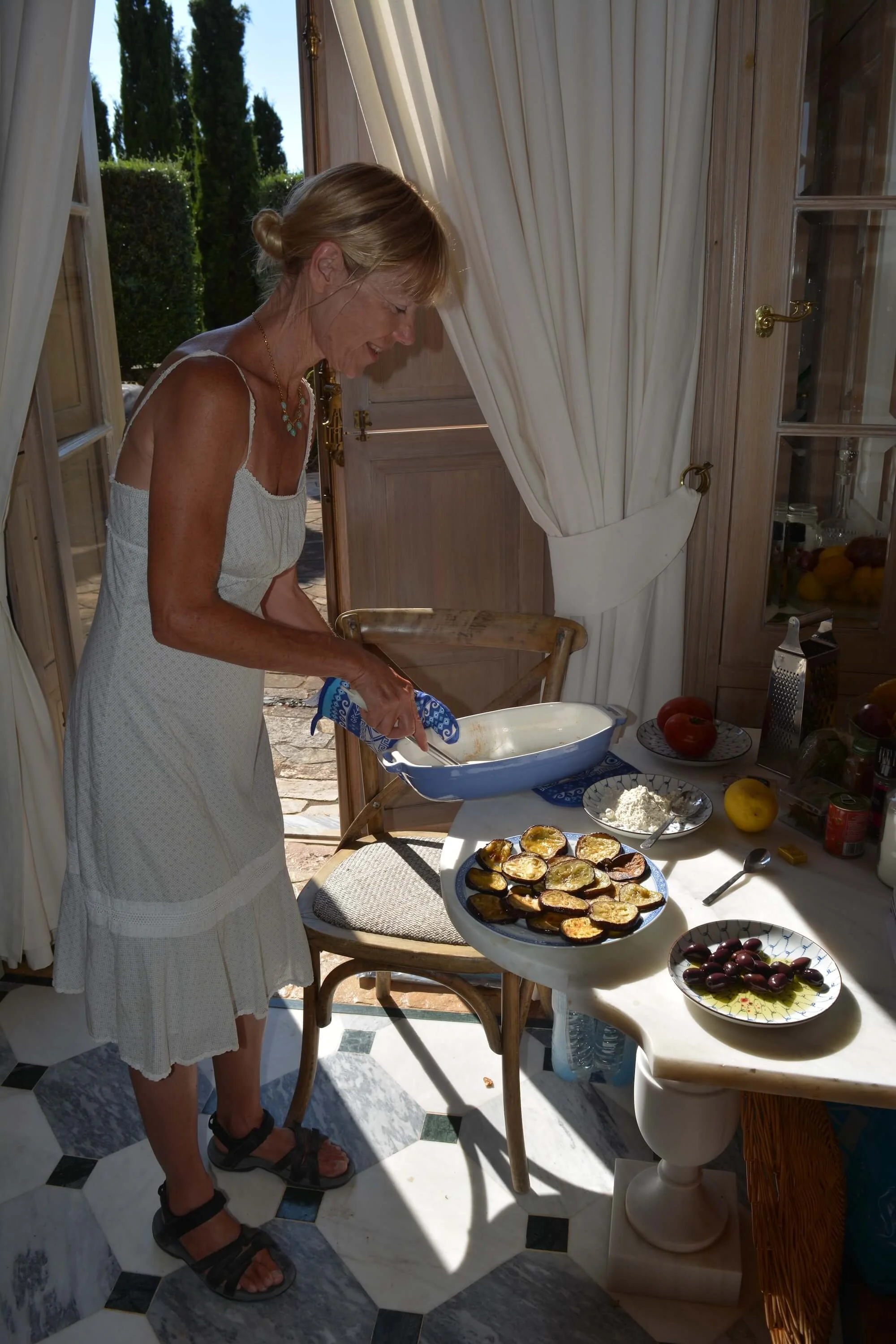
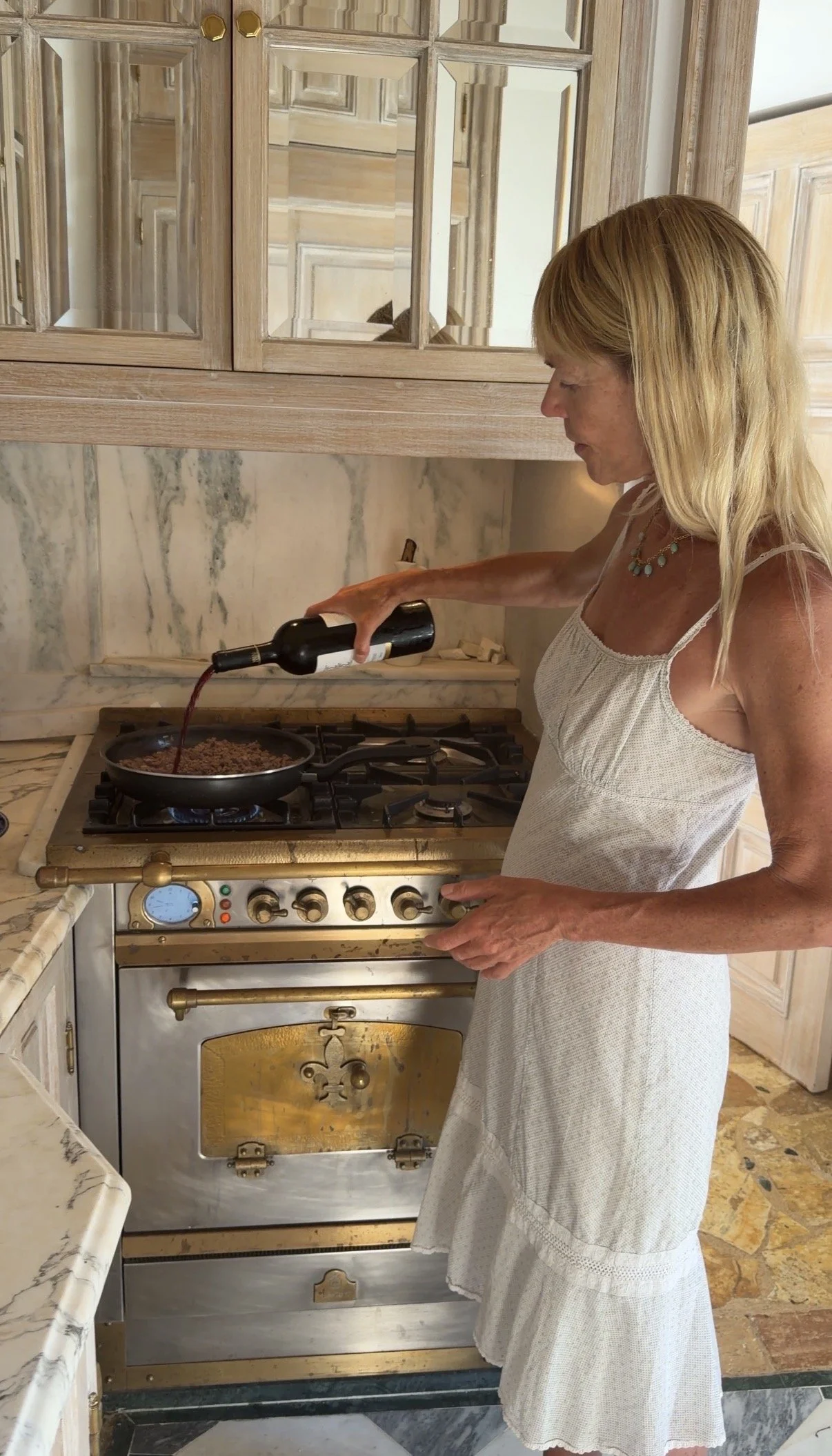
If you've made a lasagna before, you can absolutely make this. And because the flavors only deepen as it sits, it's a wonderful dish to build a day or two ahead: prepare the eggplant, the meat sauce, and the béchamel, keep them in sealed containers in the fridge, then layer and bake when you're ready to serve.
Ingredients
Serves about 8 · One 9x13-inch baking dish
For the eggplant
2 large eggplants, trimmed and sliced into ¼-inch slabs
Salt, for drawing out the water
Extra virgin olive oil, for brushing
For the meat sauce (bolognese)
2 tablespoons extra virgin olive oil
1 large onion, finely chopped
3 garlic cloves, minced
½ pound ground lamb
½ pound ground beef
2 tablespoons tomato paste
½ cup red wine
1 (14-ounce) can crushed or diced tomatoes
¾ cup chicken broth
2 bay leaves
1 cinnamon stick
4 allspice berries
3 whole cloves
2 tablespoons chopped fresh parsley
Salt and black pepper, to taste
For the béchamel
½ cup (1 stick) butter
⅔ cup all-purpose flour
4 cups milk, warmed
2 eggs
¾ cup grated kefalotiri cheese
½ teaspoon salt, plus black pepper to taste
¼ teaspoon ground nutmeg
How to Make It
1. Slice and salt the eggplant. You start by slicing and salting the eggplant, which serves as the "pasta" layer of the Greek lasagna. Trim the ends and cut into ¼-inch slabs, discarding the outermost pieces that are mostly skin. Lay the slices out in a single layer and sprinkle with salt - this draws the water out of the eggplant. After about 30 minutes, pat the slices dry.
2. Roast the eggplant. From here you can either fry the eggplant in olive oil or brush the slices with olive oil and roast them to golden. Roasting is my preferred method. Heat the oven to 400°F, brush both sides of the slices with olive oil, and arrange them in a single layer on sheet pans (use two, or work in batches, so they don't overlap). Roast, turning once, until soft and golden. Set aside, and lower the oven to 350°F for baking later.
3. Make the meat sauce. Next, you get to work on the meat sauce - a bolognese of minced lamb and beef, tomatoes, tomato paste, onions, garlic and wine, bay leaves, a cinnamon stick, allspice berries, cloves, chicken broth, and parsley. The warming spices are what make it so delicious and comforting.
In a large skillet over medium heat, warm the olive oil, add the onion, and cook until softened; add the garlic and cook until fragrant. Add the lamb and beef and brown, breaking up the meat, then pour off any excess fat. Stir in the tomato paste and let it cook for a minute, then pour in the wine and let it reduce. Add the tomatoes, chicken broth, bay leaves, cinnamon stick, allspice, and cloves, and simmer until rich and fragrant, 30 to 40 minutes. Stir in the parsley, season with salt and pepper, and fish out the bay leaves, cinnamon stick, allspice berries, and cloves before assembling.
4. Make the béchamel. The final sauce to conquer is the béchamel - a Greek take on a French mother sauce. You start with a roux of butter and flour: melt the butter in a large saucepan over medium heat, whisk in the flour, and cook for a minute or two. Slowly add the warm milk, whisking to thicken the sauce; it's done when it coats the back of a spoon. To make the Greek version even richer, take it off the heat and add the eggs (temper them first by whisking in a ladle of the warm sauce so they don't scramble), then whisk in the grated kefalotiri cheese, salt and pepper, and ground nutmeg.
5. Assemble the layers. Then you assemble the layers: line the baking dish with half the eggplant, followed by the meat sauce, topped with another layer of eggplant and the béchamel over it all.
6. Bake. Bake at 350°F until the top is golden and set. Let the moussaka rest for about 10 minutes before slicing, so it holds its shape, then cut into squares. In about 45 minutes of baking, you have a mouthwatering meal to share with loved ones and everyone lucky enough to gather at your table.
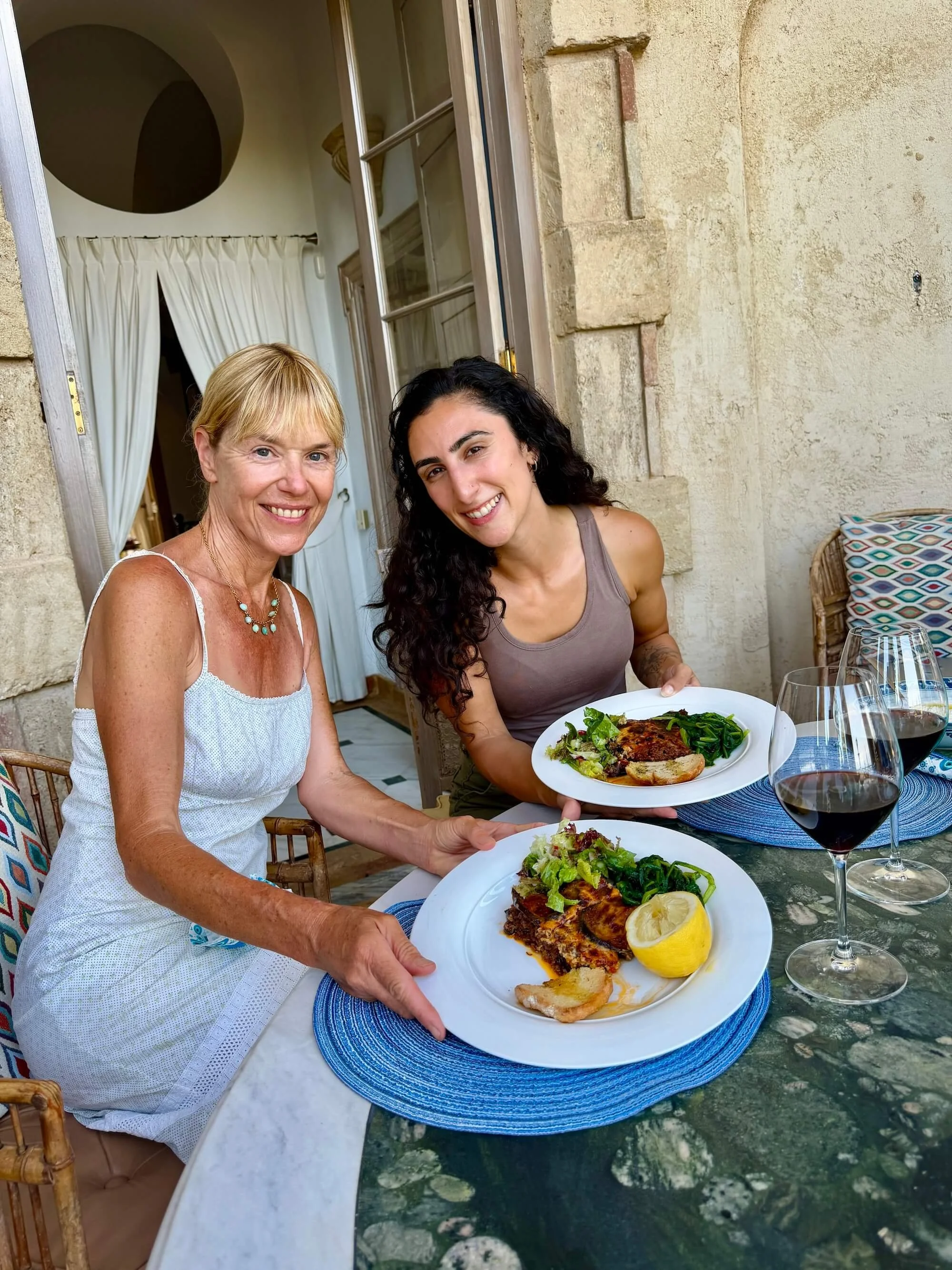
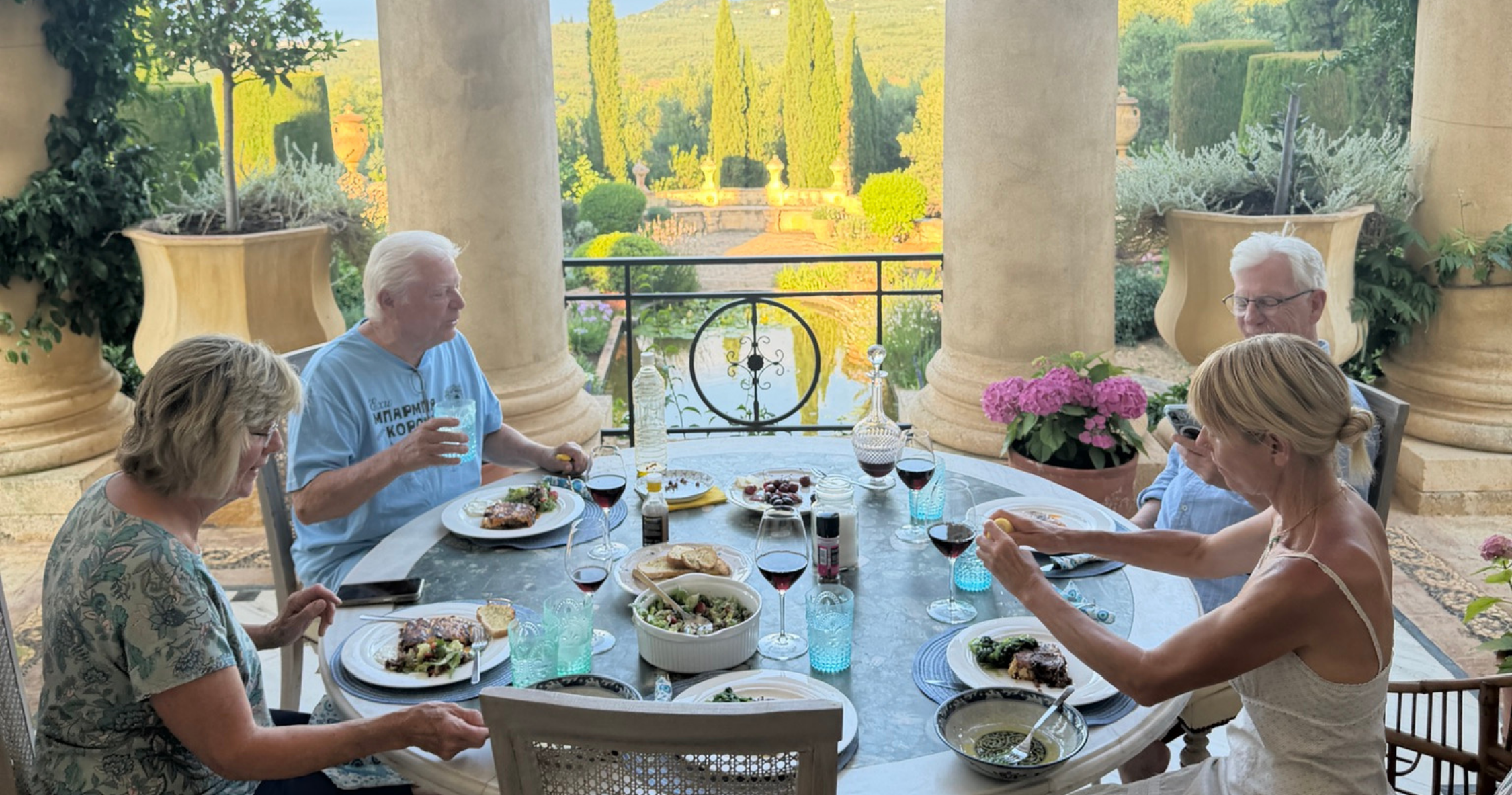
There's a reason I come back to this dish again and again. Moussaka holds everything I love about the Greek table: patience, generosity, and the simple joy of feeding people well. When I set it down in the center of the table and watch everyone lean in, I'm right back on a veranda in Greece - no one in a rush, the whole evening stretching out ahead of us.
Want a beautiful Greek-inspired meal like this brought to your own table?
I offer private Mediterranean dinners and cooking classes in Napa and Sonoma and I'd love to cook for you. And soon, you'll be able to experience it all in Greece itself: culinary experiences at The Charles Shoup House in Koroni are coming in 2027.